

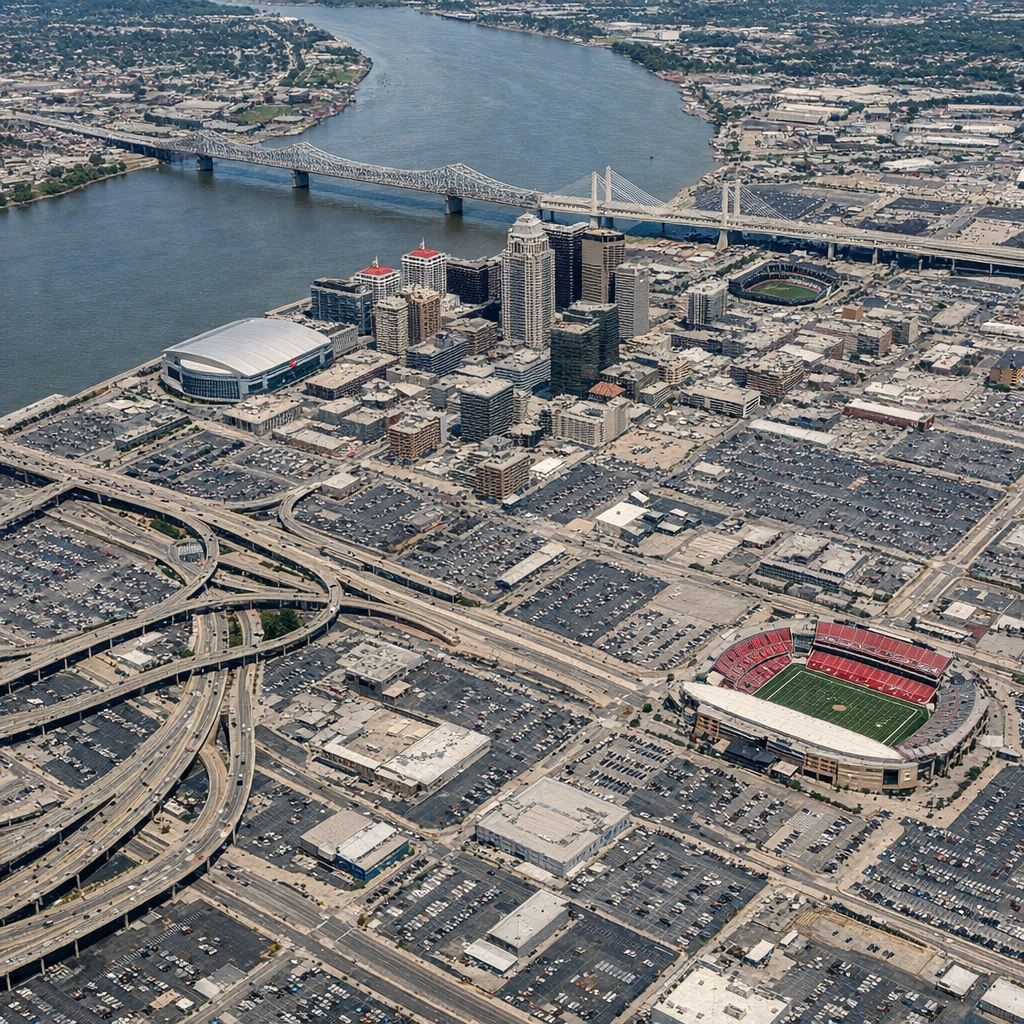
Louisville, Kentucky, is experiencing a significant urban heat island (UHI) effect, where urban areas become notably warmer than their rural surroundings. This phenomenon arises from factors such as extensive dark-colored surfaces like asphalt and concrete, which absorb and retain heat, and a scarcity of green spaces that would otherwise provide cooling through shade and evapotranspiration.
Impacts on the Community
The UHI effect in Louisville has several adverse consequences:
- Health Risks: Elevated temperatures can exacerbate respiratory and cardiovascular conditions, particularly among vulnerable populations such as the elderly and children.
- Increased Energy Consumption: Higher temperatures lead to greater use of air conditioning, resulting in increased energy costs and higher greenhouse gas emissions.
- Environmental Degradation: The heat island effect contributes to poorer air quality and can stress local ecosystems.
Mitigation Strategies
To combat the UHI effect, Louisville has implemented several initiatives:
- Urban Heat Island Project: This project focuses on increasing the city’s tree canopy, promoting the use of reflective roofing materials, and converting barren lands into green spaces to reduce heat absorption.
- Prepare Louisville Climate Adaptation Plan: This plan outlines strategies to build resilience against climate change impacts, including measures to address the UHI effect.
Residents can also contribute by planting trees, using light-colored roofing materials, and supporting local green initiatives. Community involvement is crucial in creating a cooler, healthier urban environment for all.