

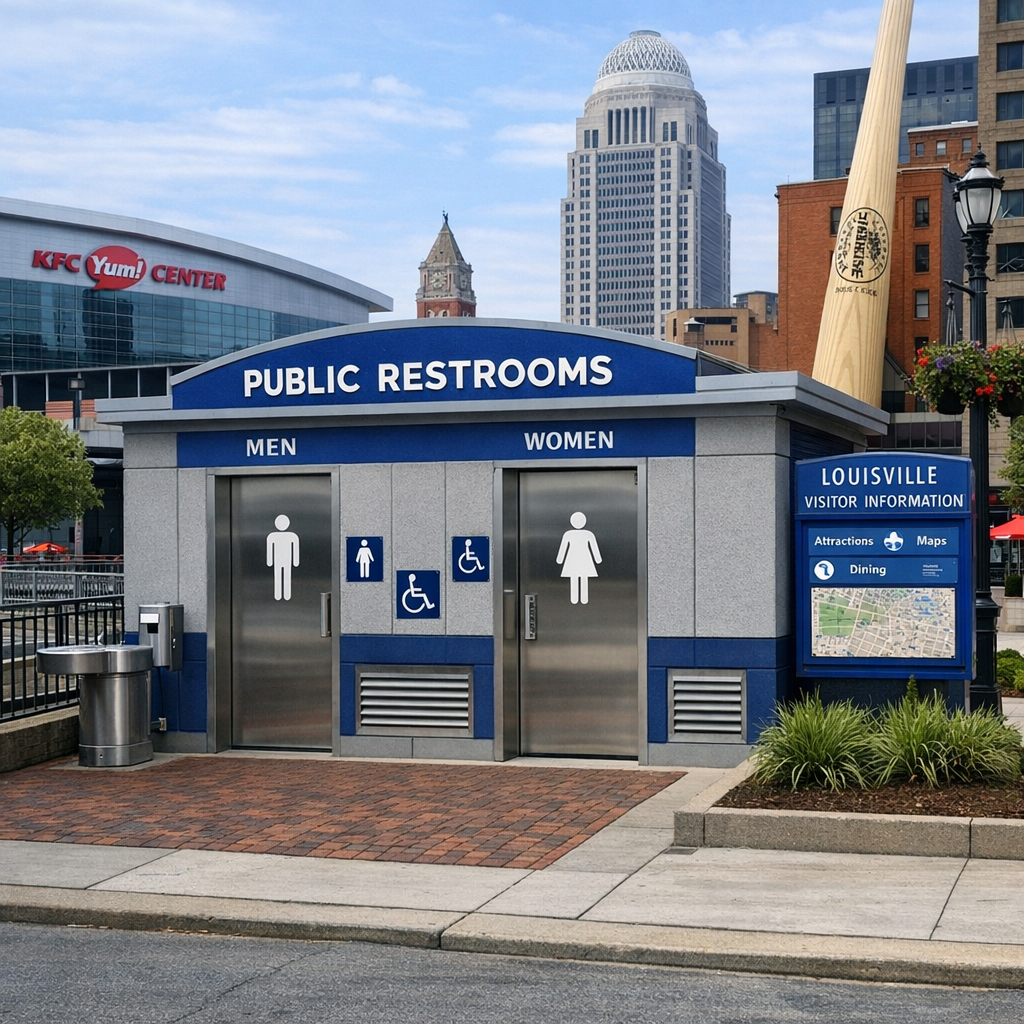
Louisville’s downtown area is grappling with a significant shortage of public restrooms, a situation that affects both residents and visitors. This lack of facilities has led to increased instances of public waste, raising health and sanitation concerns.
Current Challenges
Since 2021, the Louisville Downtown Partnership (LDP) has addressed over 3,380 incidents of biohazardous waste, predominantly human and animal waste, within the city’s central business district. In the first half of 2025 alone, there were 950 such reports, highlighting the escalating nature of the problem.
Individuals experiencing homelessness are particularly impacted. With limited access to restrooms, many resort to using alleys, dumpsters, or other public spaces, exacerbating sanitation issues. Josh Williamson, who has faced homelessness, noted, “Not only do you have the inability to properly use the restroom in a safe, clean environment. You also have the inability to wash your hands afterwards [and] stay hydrated.”
Community Perspectives
Various community leaders and organizations have emphasized the need for accessible public restrooms. Frederick Klotter, rector of the Cathedral of the Assumption, stated, “It’s a human need. It’s something human beings need.” The church provides restroom access during its daily free lunch service, despite past incidents of misuse.
However, city officials have expressed reservations about installing public restrooms. Concerns include the costs associated with maintenance, potential liability issues, and determining optimal locations. Metro Council Member Ken Herndon remarked, “It’s complicated. It’s not impossible, but it’s more complicated.”
Potential Solutions
Advocates suggest that increasing the number of public restrooms could alleviate sanitation issues and improve the quality of life for all downtown visitors. Former Metro Council Member Jecorey Arthur sponsored a resolution directing the city’s health department to inventory existing public restrooms and assess the need for additional facilities.
Implementing well-maintained public restrooms could address health concerns, support the homeless population, and enhance the overall downtown experience. Collaborative efforts between city officials, community organizations, and residents are essential to develop and implement effective solutions.